
The Arabian star calendar: how the desert year is counted in 28 stars
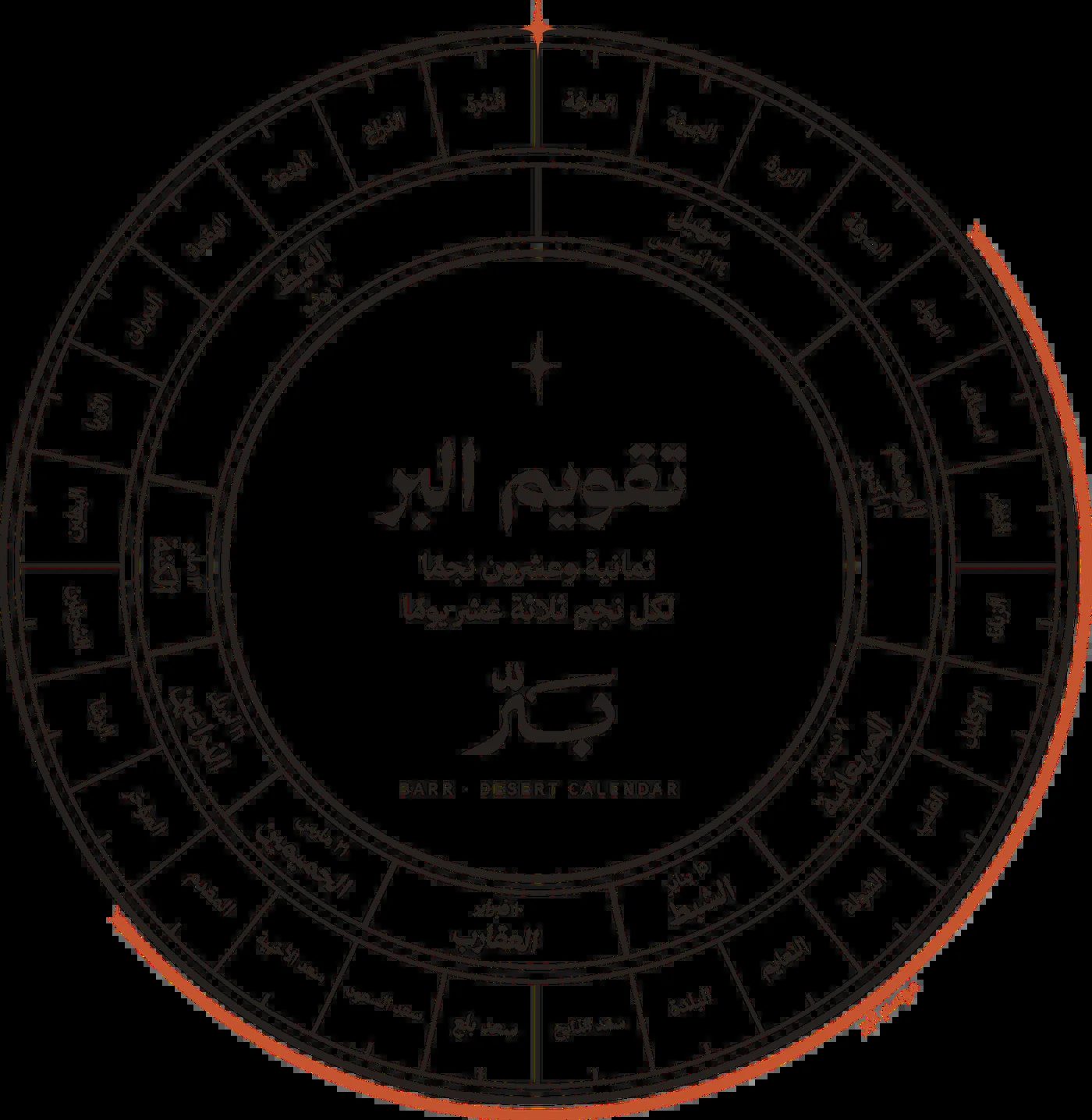
The Arabian star calendar divides the year into twenty-eight stars, or tawali', of thirteen days each, except Al-Jabha, which has fourteen, so the count comes to 365 days. The stars are grouped into seasons that anyone who goes out to the desert knows by name: Suhail, Al-Wasm, Al-Murabbaniya, Al-Shabt, Al-Aqarib and Al-Hamimain, then the summer seasons until Suhail returns. Many people start the year with the rising of Suhail on 24 August and call it the Suhaili year.
How does the Arabian star calendar work?
The idea is simple. Roughly every thirteen days a new star appears on the horizon just before dawn, and that star tells you where you are in the year. The Arabs counted twenty-eight lunar mansions, and as the sun moves through them over the year, each star became a marker for a stage of heat, cold or rain. Because the count follows the sun, its dates hardly move in the Gregorian calendar: Suhail rises on 24 August every year, and Al-Wasm starts on 16 October every year.
Dr Abdullah Al-Musnad notes that some people of the Arabian Peninsula made the rising of Suhail the start of a 365-day solar year, and that the Arabs honoured Suhail as a marker of time, not because the star itself changes the weather. That is the heart of the star calendar: a shared language for knowing when to plant, when to head out, and when to get ready for the cold.
The seasons of the star calendar, from Suhail to spring
These are the seasons of the cool half of the year, the ones the desert trip season turns on, with their stars and start dates as Saudi weather specialists give them:
| Season | Starts | Its stars |
|---|---|---|
| Suhail | 24 August | Al-Tarfa, Al-Jabha, Al-Zubra, Al-Sarfa |
| Al-Wasm | 16 October | Al-Awwa, Al-Simak, Al-Ghafr, Al-Zubana |
| Al-Murabbaniya | 7 December | Al-Iklil, Al-Qalb, Al-Shawla |
| Al-Shabt | 15 January | Al-Na'aim, Al-Balda |
| Al-Aqarib | 10 February | Sa'd Al-Dhabih, Sa'd Bula, Sa'd Al-Su'ud |
| Al-Hamimain | around 21 March | Sa'd Al-Akhbiya, Al-Muqaddam |
Each season has its own character. Suhail breaks the worst of the summer heat without ending it. Al-Wasm is the season of the rain that greens the land. Al-Murabbaniya brings the real cold, day and night. Then Al-Shabt brings the coldest days; Dr Al-Musnad advises against planting in its first thirteen days because of the frost. After it comes Al-Aqarib, thirty-nine days across three stars, and then Al-Hamimain with the spring equinox, the last stretch for desert trips before the heat.
Is the star calendar still useful today?
The star calendar is not a weather forecast. Its dates are fixed, while the weather arrives early or late from year to year, which is why some specialists separate the "calendar" season from the "real" one. People still use it anyway, because it packs generations of experience into a single line: when Suhail rises the end of the night cools, when Al-Wasm comes expect rain, and when Al-Murabbaniya comes get the farwa out.
Farmers still use it for planting: the days of Al-Tarfa, for instance, suit planting palm offshoots, as the weather researcher Abdulaziz Al-Husaini notes. Desert people use it to plan their trips: when the nights are kindest, and when the cold starts that calls for a fire and heavier clothes.
Some dates differ slightly from one source to another: some count the Suhail season as fifty-two days and others fifty-three, and some start Al-Hamimain on 20 March and others on 21 March. We follow what Saudi weather specialists publish and point out the difference where there is one. A day either way changes nothing on a trip, but it matters to anyone who likes to be exact.
The star calendar at Barr
Barr runs on this calendar: a collection each season, telling its season, and no sales. The Desert Calendar Long Sleeve carries the whole circle on the back, twenty-eight stars of thirteen days each, and the astrolabe it was read with on the chest. The seasons and the dates of our collections are on Seasons of the desert. The collection available now is Al-Wasm, and Al-Murabbaniya follows.
Questions
How many stars are in the star calendar?
Twenty-eight, of thirteen days each except Al-Jabha with fourteen, which makes a 365-day year.
When does the year start in the star calendar?
Many people start it with the rising of Suhail on 24 August, which is why it is called the Suhaili year.
Do the star calendar dates change each year?
They stay almost fixed in the Gregorian calendar because they follow the sun. The actual weather can come early or late.
What are the winter seasons in the star calendar?
Al-Murabbaniya from 7 December, Al-Shabt from 15 January and Al-Aqarib from 10 February.


